Chicken Broth, The Long Way
This is my basic and very general recipe for chicken broth. It is also extraordinary, in the way that only chicken broth, made with love, care, salt, and plenty of bone-in, skin-on chicken can be.
Makes 10-12 cups
This is my basic and very general recipe for chicken broth. It is also extraordinary, in the way that only chicken broth, made with love, care, salt, and plenty of bone-in, skin-on chicken can be. I like to use a cut-up chicken, rather than a whole, uncut one. It’s something I learned in Oaxaca, watching cooks prep soup in a market stall—a romantic, if fuzzy, memory. Cutting up the chicken does two things. First, it allows you to remove the chicken parts at different times, so that the breast can come out once it’s poached, while the leg/thigh can continue to simmer and become more tender. Second, hacking up the chicken exposes the inside of the bones, which releases all that collagen and marrow into your broth, making it richer and more flavorful. If your preference is to purchase parts instead (and you’re just after broth, no meat), I would go for all wings—or backs, if available, which are cheaper, less wasteful, and have the highest ratio of skin and bone to meat.
Ingredients
- 4–5 pounds bone-in, skin-on chicken (parts or a whole chicken)
- 2 pounds chicken feet, optional
- 2 large yellow onions, unpeeled, quartered
- 2 garlic heads, unpeeled, halved crosswise
- 6 celery stalks, chopped
- 1–2 carrots, unpeeled, or 1 large fennel bulb, chopped
- 2 teaspoons black peppercorns
- 1 fresh or dried bay leaf (optional)
- Kosher salt
Preparation
1. Place the chicken, chicken feet (if using), onions, garlic, celery, carrots, peppercorns, and bay leaf (if using) in a large pot and cover with 12–14 cups water. (Basically, you want to fill your pot to the top with water.)
2. Season with a good amount of salt (not quite salty like the sea, but you can really season it well, keeping in mind it will reduce down a bit) and bring to a boil. Reduce the heat to medium-low (the broth should be gently simmering) and continue to simmer until the chicken is cooked through and falling apart, the vegetables are nearly mush (but still taste good), and the broth is as seasoned and delicious as you’d want it to be when serving, about 1 ½ hours or so (you can go longer, upwards of 2 ½–3 hours, but I would not go shorter). If you want to pluck the chicken pieces out and pick the meat from them for later use, you should (I do!).
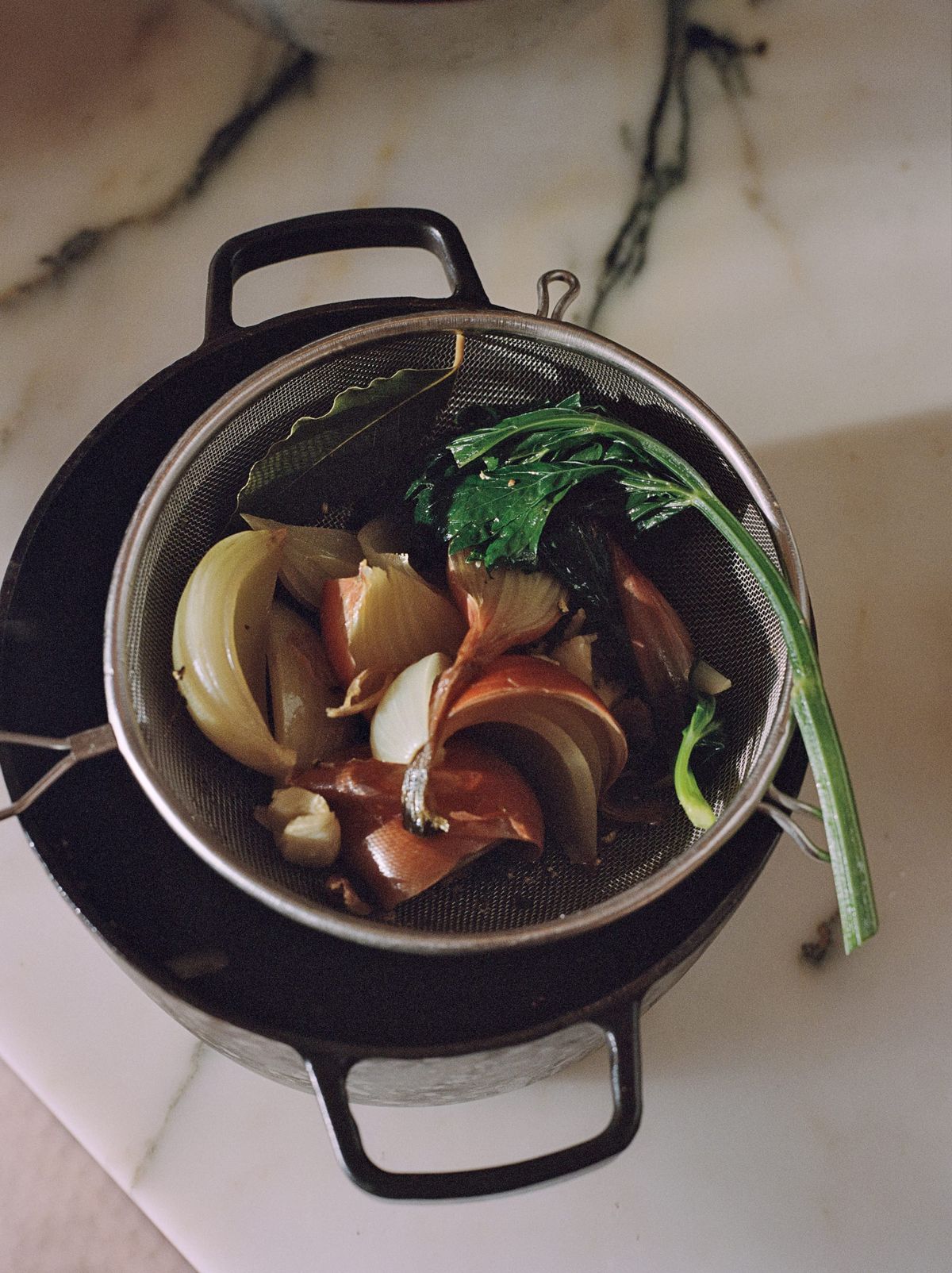
3. Strain the broth. (I use a basic strainer—no need for cheesecloth.) Keep it hot if using right away or let it cool before refrigerating.
NOTE: You can purchase a whole chicken and cut it up, have the butcher do it for you, or simply purchase parts (wings, backs, legs, etc.). Or use a whole, uncut chicken and plop it right in there. You can also save up the carcasses from your whole roasted or rotisserie chickens and make broth that way, using three or four carcasses instead of one fresh chicken.
DO AHEAD: Broth can be made 5 days ahead and refrigerated, or several months ahead and frozen.


Discussion